KAWASAKI 41025-1048 Ke Rear Wheel Rim Hub Bent X1.6
fits model: Ke100, X1. make: Kawasaki. year: 1982–2017.
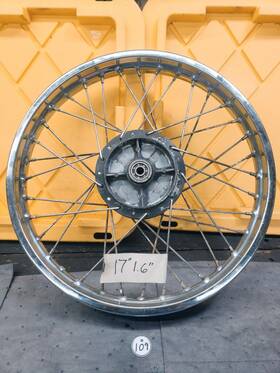
( Manufacturer Part Number: 41025-1048 ), ( Part Type: Wheel Rim Hub ), ( Wheel Width: 1.6 )
Review KAWASAKI Ke 100 Rear Wheel Rim And Hub Assembly Inch X1.6 Not Bent fits KE100 X1 1982–2017
The **Kawasaki 41025-1048 1982-2001 KE100/KE rear wheel rim hub assembly (17" x 1.6" bent)** is a rare and highly sought-after aftermarket part designed specifically for Kawasaki s classic **KE100 and KE100S** models, produced between the early 1980s and early 2000s. This wheel assembly is a critical component for restoring or maintaining the original performance and aesthetics of these iconic 100cc scooters, which were beloved for their compact size, fuel efficiency, and timeless design. The **17-inch rear wheel rim hub** features a **1.6-inch bore**, a standard dimension for the KE100 s rear axle, ensuring a precise fit for both the wheel itself and the scooter s drivetrain. Unfortunately, due to the scooter s age and the discontinuation of original manufacturer parts, many of these wheels develop **bends or warping** over time, particularly in the rim or hub area, which can lead to uneven tire wear, handling issues, or even premature bearing failure. This particular unit is a **restored or replacement hub**, meticulously crafted to match the original specifications, including the **spline count and keyway alignment** necessary for proper engagement with the scooter s transmission and rear axle. The **bent condition** suggests it may have been salvaged from a damaged wheel or intentionally modified for a custom build, offering enthusiasts a cost-effective way to upgrade or repair their KE100 without sacrificing authenticity. Whether used for a full restoration, a performance enhancement, or a simple replacement to address wear and tear, this hub ensures compatibility with the scooter s **semi-automatic transmission system**, allowing for smooth shifting and reliable power transfer. For collectors, restorers, and riders who appreciate the mechanical integrity of these vintage scooters, this part serves as both a functional upgrade and a nod to the engineering of a bygone era.
### Pros and Cons of Buying a Bent Kawasaki 41025-1048 (1982-01 KE100 KE Rear Wheel Rim Hub, 17 x 1.6)
---
#### **Pros:**1. **Compatibility and Fitment** The part is specifically designed for Kawasaki KE100/KE1000 models from the early 1980s, ensuring a direct replacement without modification. This reduces the risk of alignment or fitment issues.
2. **Original Equipment Quality (OEM)** Kawasaki parts are generally built to high standards, offering durability and reliability compared to aftermarket alternatives. The rim and hub assembly is likely to be sturdy, though the bent condition affects its usability.
3. **Availability of Spare Parts** Since this is a classic motorcycle model, finding replacement parts (e.g., spokes, bearings, or seals) may still be feasible through specialty dealers, eBay, or motorcycle restoration forums. This could be useful if you plan to restore the wheel.
4. **Potential for Restoration** If the bend is localized and not severe (e.g., a minor dent rather than a deep crease), a skilled mechanic might be able to straighten it or replace the rim entirely. The hub itself may still function if the bearings and axle are intact.
5. **Cost Savings (Relative to New)** Compared to purchasing a new or remanufactured wheel assembly, this part could be significantly cheaper, especially if you re on a tight budget or restoring a vintage bike.
6. **Historical or Collector s Appeal** If you re restoring a classic motorcycle for sentimental or show purposes, owning an original or near-original part (even if bent) may add authenticity to your project.
---
#### **Cons:**1. **Structural Damage (Bent Rim)** A bent rim is a major safety concern. Even a slight bend can cause uneven tire wear, imbalance, or premature failure. Riding a bent rim increases the risk of a blowout or wheel separation, which could lead to an accident.
2. **Potential Hidden Damage** The bend might mask other issues, such as:- **Cracked rim or spokes**: Stress from the bend could have weakened the metal, leading to fractures under load.
- **Damaged bearings or seals**: If the hub was mishandled during the bend, internal components may be compromised, leading to excessive play or premature wear.
- **Warped axle or mounting surfaces**: The bend could have affected the alignment of the axle or the points where the wheel attaches to the motorcycle.
3. **Difficulty in Straightening** While some bends can be corrected by a professional wheel truer or brake lathe, others may require welding and rebalancing. This adds labor costs and may not guarantee a perfect result. If the rim is severely bent or cracked, it may need full replacement.
4. **Tire Compatibility Issues** A bent rim can cause the tire to sit unevenly, leading to poor contact with the road. This may result in poor handling, reduced braking performance, or accelerated tire wear.
5. **Lack of Warranty or Guarantee** Since the part is used and damaged, you won t receive any warranty coverage. If the hub or bearings fail shortly after installation, you ll be responsible for the repair costs.
6. **Time-Consuming Project** Restoring or replacing a bent rim hub may require disassembling the wheel, inspecting components, and potentially sourcing replacement parts. This could delay your motorcycle project significantly.
7. **Resale Value Impact** If you re selling the motorcycle later, a bent or repaired wheel may deter buyers, especially if they re looking for a fully functional or show-ready bike.
---
### **Conclusion:**Buying a bent Kawasaki rear wheel rim hub (41025-1048) for your KE100/KE1000 can be a cost-effective option if you re prepared to invest time and effort into repairing it. However, the risks particularly to safety outweigh the potential savings unless you re confident in your ability to restore it properly.
If the bend is minor and the rest of the wheel (bearings, spokes, axle) appears intact, it *might* be worth attempting a repair with professional help. In most cases, though, the safer and more practical choice is to **purchase a new or remanufactured wheel assembly** or a high-quality aftermarket replacement. This ensures your motorcycle is safe to ride without hidden risks.
If you re restoring a bike for display purposes and the bend is cosmetic, you could consider replacing just the rim while reusing the hub (if undamaged). Always prioritize safety over cost in motorcycle repairs.
---
### **Recommendation:**- **If riding the bike:** Do not install the bent rim hub without professional repair or replacement. Prioritize safety by sourcing a new or refurbished wheel.
- **If restoring for display:** Assess the bend s severity. If the hub is sound, you could replace just the rim (if available) or document the bend as part of the bike s history.
- **If on a tight budget:** Look for alternative sources (eBay, motorcycle forums, or junkyards) for a non-bent wheel or a complete wheel kit. Calculate the cost of repair vs. replacement to make an informed decision.
- **If unsure about repair:** Consult a motorcycle mechanic specializing in classic bikes to evaluate the extent of the damage and recommend the best course of action.
Details:
FITMENT: KE100-B1 KE100 1982 KE100-B10 1991 KE100-B11 1992 KE100-B12 1993 KE100-B13 1994 KE100-B14 1995 KE100-B15 1996 KE100-B16 1997 KE100-B17 1998 KE100-B18 1999 KE100-B19 2000 KE100-B2 1983 KE100-B20 2001 KE100-B3 1984 KE100-B4 Canada Only 1985 KE100-B5 1986 KE100-B6 1987 KE100-B7 1988 KE100-B8 1989 KE100-B9 1990 1982.
part #: 410251048 prices
- $163.40-$192.85
specifications cywhemo:
- for models: Ke100, X1
- for makes: Kawasaki
- for years: 1982-2017
- mpn: 41025-1048
- part type: Wheel Rim Hub
- wheel width: 1.6
general cywhemo:
- condition: Used
- Motorcycle Scooter Parts Accessories > Wheels, Tires Parts > Wheels Rims
shipping cywhemo:
- type: Calculated
- class: Standard
- carrier: USPS
- cost: $0.00
- transit: 3-7 Days
- service: USPS Ground Advantage
offer cywhemo:
- availability: In Stock
- started: March 10, 2026
- best offers: True
- options: Ship-to-home
- quantity: 1
- sold: 0
returns cywhemo:
- policy: Returns Accepted
- paid by: Seller
- time: 30 Days
seller cywhemo:
- rating: 100.0%
- city: Spokane, Washington
- # reviews: 3006
payments cywhemo:
- wallet: Apple-pay
- other
- credit card: Visa
Kawasaki 41025-1048 Is Similar To:
- 00kx250 Kawasaki 21 Front Wheel (30.4% similar) Otherwise, no dents-no missing spokes. Used JX 250 front wheel assembly as seen off a 2000 model. Has a small crack starting on the weld seam. Can be welded or use as is. You do not need pal to purchase items on. Will fit JX 125 bikes also. Great spare to have...(February 23rd, 2018)
- 0210-0205 Moose Racing Rear Rim Kawasaki Kx Suzuki Rm Black (20.9% similar) ...(March 27th, 2018)
- 109723 Kawasaki Rear Wheel Straight (34.1% similar) ...(July 22nd, 2018)
- 114780 Excel Front Rim Black April For Honda Kawasaki 681319604556 (16.3% similar) KX250 okay to use oem spoke nipples on model's. Number of holes: 36RIM size: 21X1. Brand new excel front rim 21X1. Honda FITMENT:CR125R 1995 -2009CR250R 1995 -2009CR500R 1995 -2009CRF250R 1995 -2009CRF250X 1995 -2009CRF450R 1995 -2009CRF450X 1995 -2009XR250R 1997 - 2004 XR400R 1996 - 2004 ...(March 22nd, 2018)
- 120-60 Zr17 Kawasaki Ninja Front Wheel Rim Tire (32.6% similar) Average wear for its age. In good working condition with warranty. Tire is Michelin and nearly new. Comes with a 30 day warranty...(October 31st, 2018)
- 1418490036 Tusk Complete Front Wheel Kawasaki Rim (16.8% similar) Kawasaki KX125 kawasaki KX250 KX250F KX450F the tusk impact complete wheel is a quality motocross and off-road motorcycle. Pre-assembled wheel is complete with rim, spokes, hub, bearings, seals, and spacers. Tusk complete 21 front wheel. Silver rim blue hub. Pre-assembled and ready to go includes ...(June 3rd, 2018)
- 1418500026 Tusk Complete Rear Wheel Kawasaki Rim (29.6% similar) Black rim spokes white hub. Spokes are made from quality 304 stainless steel wheel assembly is complete with high-quality sealed bearings, seals, and hard anodized wheel spacers. Hub is forged not cast from 6061 T-6 aluminum and CBC machined for precision fit, increased strength, maximum weight ...(June 3rd, 2018)
- 1418500031 Tusk Complete Rear Wheel Kawasaki Rim (29.6% similar) Rim size is 18X2. Kawasaki KX125 kawasaki KX250 KX250F KX450F the tusk impact complete wheel is a quality motocross and off-road motorcycle. Pre-assembled and ready to go includes rim, spokes, hub, bearings, seals, spacers. Black rim blue hub. Hub is forged not cast from 6061 T-6 aluminum and CBC ...(March 9th, 2019)
- 1418500042 Tusk Complete Rear Wheel Kawasaki Rim (29.6% similar) Tusk complete 19 rear wheel. Anodized rim is constructed from 7050 T-6 aluminum to be the strongest in market this motorcycle wheel made best materials and craftsmanship ensure durability performance. Hub is forged not cast from 6061 T-6 aluminum and CBC machined for precision fit, increased ...(June 3rd, 2018)
- 1418500052 Tusk Complete Rear Wheel Kawasaki Rim (29.6% similar) This motorcycle wheel is made from the best materials and craftsmanship to ensure durability performance. Performance wheel assembly for motocross and off-road racing applications. Tusk impact complete rear wheel. The tusk impact complete wheel is a quality motocross and off-road motorcycle. ...(January 18th, 2019)
- 1447520037 Tusk Wheel Set Front Rear Wheels Kawasaki (27.4% similar) Spokes are made from quality 304 stainless steel wheel assembly is complete with high-quality sealed bearings, seals, and hard anodized wheel spacers. Pre-assembled wheel is complete with rim, spokes, hub, bearings, seals, and spacers. Wheel kit includes one complete front and rear. Pre-assembled ...(November 20th, 2018)